
Blog · How to calm a reactive dog
When do I correct my reactive dog? Two seconds before the lunge
When to correct a reactive dog: about two seconds before the lunge, at the tail base rise. The four-stage escalation ladder and how to read it.
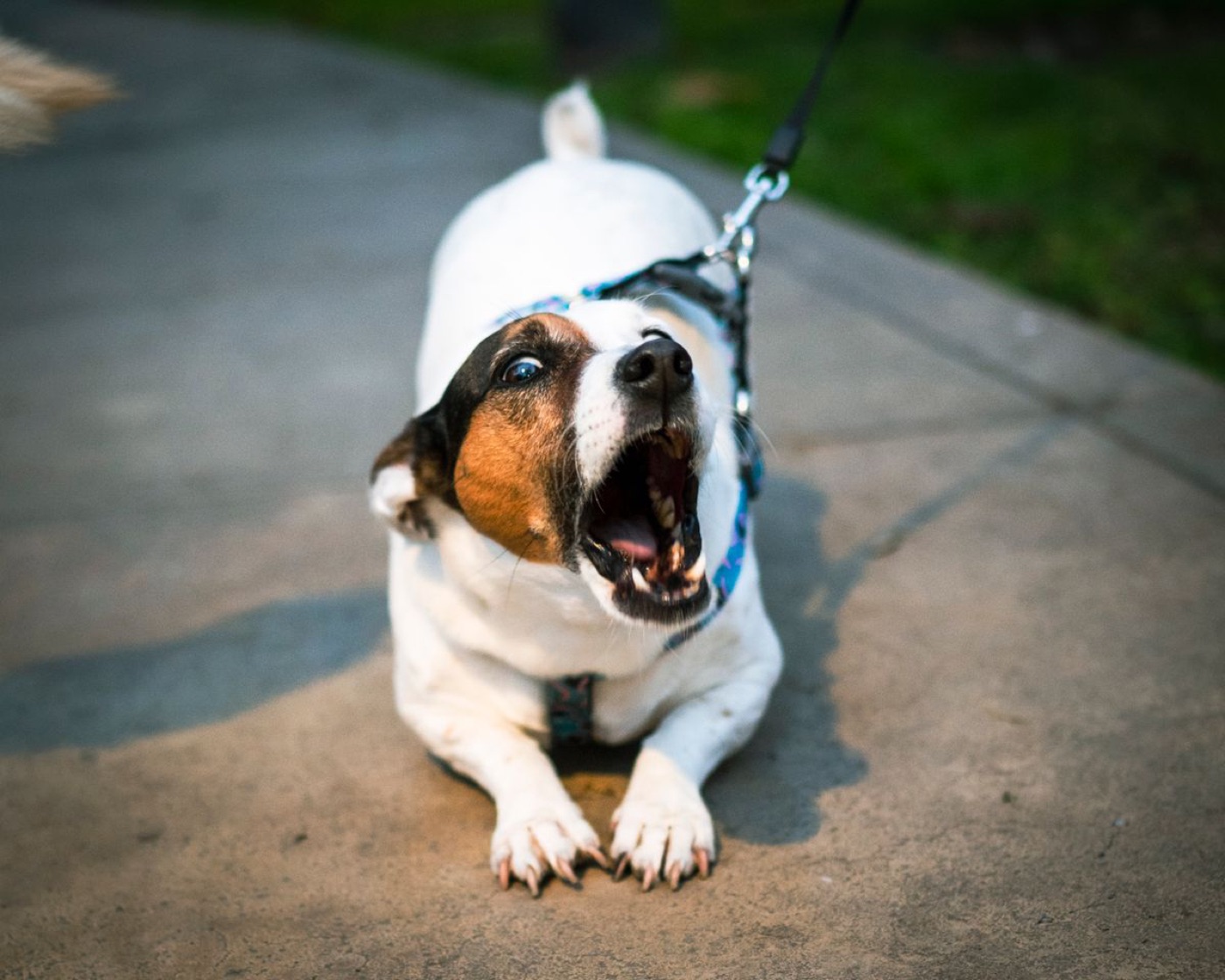
Correct your reactive dog roughly two seconds before the lunge, while the intention is forming and before the body commits. Most owners correct during or after the explosion, which is like fining someone a week after they ran the red light. The dog cannot connect the two.
"But he goes from nothing to lunging instantly." I hear this every week, and it is never true. The build is there. It is just quiet, and nobody has shown you the stages.
The escalation ladder
Every reaction climbs the same four steps.
Glancing. Your dog notices the other dog. Head turns, ears shift. This is legal. Noticing the world is allowed, and correcting a glance teaches your dog that looking at things is dangerous.
Perking up. The body starts to load. Ears forward, weight creeping ahead, the walk gets a little taller.
Pointing. Head up, chest forward, tail base fully high. The dog has stopped taking in the world and started aiming at one piece of it. Nothing has happened yet from the outside. Everything has happened on the inside.
Lunging. The part everyone can see, and the only part most owners react to.
The work happens at pointing. Before he even has the intention locked in, you stop him from the intent.
The tail base is your clock
Watch the first two inches of the tail, not the tip. On a reactive dog, the tail base rises over a countable two seconds. I literally count it in sessions: one, two. The correction lands at the top of that rise, one short pop, before the chest commits. Not a yank, not a drag, one clean message.
Get the timing right and the correction is tiny. A dog interrupted at pointing needs almost nothing to come back to you. A dog mid-lunge cannot hear you at all, because by the bark, the decision was made seconds ago.
The other half: praise the climb-down
This is the part that makes it fair. If your dog starts up the ladder and then de-escalates on their own, at any stage, that earns praise and no correction. Glance at the dog, then look away? Good, good, good. Perk up, then shake it off? That is the whole goal of the training happening right in front of you.
You are teaching one rule: escalate slower, de-escalate quicker. The correction handles one side, the praise handles the other, and the dog learns there is always a way to win.
Why you keep missing it
A signal is a split second. You miss it live, everyone does at first, and that is not a reading problem you were born with. Film your walks. Freeze the frame at the tail rise and the picture jumps out at you. I do this with owners in every reactive dog program, and there is always a moment where they go quiet, because they suddenly see the two seconds they have been missing for years.
Your dog has been warning you the whole time. It is not wrong that you missed it. You did the best with what you knew.
If your dog barks and lunges on lead and you want the full system, that is what The Reactive Dog Reset covers, self paced, $129. If you just want to know where your dog sits right now, the free On-Edge Audit takes two minutes.