
Field note · Read your dog
How to read your dog's body language
Dogs do not speak English, they speak dog, and the whole of training rests on learning to read them. Here is the full picture, part by part, from the ears to the tail to the five states a dog moves between.
Your dog does not speak English, and is not going to learn it. It speaks dog. So the single most useful thing you can do as an owner is become fluent in dog, because everything else in training sits on top of it. When I watch someone talk their dog through a moment, on and on, I already know the kind of trouble they are having. The dog has no idea what the words mean. But the owner could read what the dog is saying in a second, if they knew where to look.
Two rules before the parts. First, you are reading for a change, not a fixed pose. Early on a dog can go from nothing to explosive with no visible build-up. As it settles through a program the curve gets readable, and you learn to catch the moment it starts. Second, you read every signal in context. A dog licking its lips right after a treat is not stressed, it is tasting dinner. No single body part means anything on its own. You read the whole animal and land on a state.
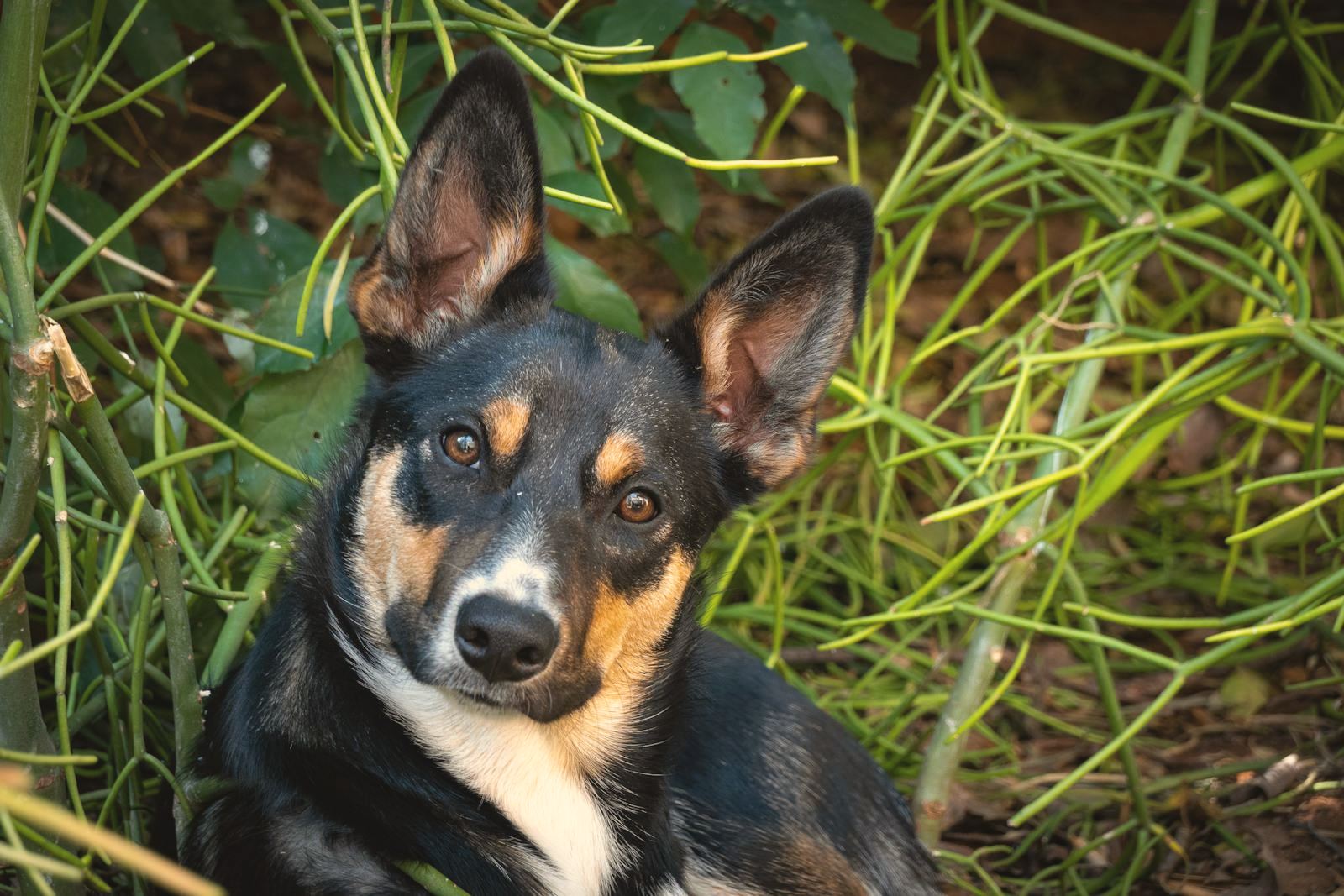
Start with the natural state
Before you can read movement, you need to know the dog at rest. Some dogs carry their ears up, some flop them down. Some tails sit high, some low, some curl. A schnauzer’s tail does not drop the way a Labrador’s does, and a curled tail can be tight or loose without meaning anything. So the first job with any dog is to learn its neutral, the shape it holds when nothing is happening. Everything below is read as a move away from that.
Ears
The ears are fast and honest. Read them as forward, to the side, or back, and watch for the two ears doing different things.
- Forward. Alert, curiosity, or aggression and offence. The dog has locked onto something.
- To the side or middle. Neutral, or focused. A dog walking nicely with you often holds its ears to the side.
- Back, pinned. Fear.
- One forward, one back or to the side. Listening, or anticipating. The dog has caught a name, a lift starting to move, the kitchen at dinner time.
- Dropped down, "Dobby ears". Either celebration, the dog carrying a toy with a look-what-I-have face, or scheming, the dog eyeing food it knows it should not take and planning the theft.
Two stranger tells, if you are close enough. The smell of the ears gets stronger as arousal rises, because temperature rises with it. And a fixated dog stops feeling its ears: pinch them and a dog locked onto a cat will not notice, because high arousal lifts the pain threshold.
Eyes
- Hard stare, no blinking. Fixated on something.
- Soft, slow blink. Relaxed.
- White showing, whale eye. Usually stress or wariness, but check the context, a sleepy head-down dog shows white too.
- Eyes bulging, "on the end of the nose". Fear.
- Glancing away, looking off to the side. The dog is choosing not to engage, which is a dog handling itself well.
- A wink. An invitation to play. Watch for it, you will start to see it.
Pupils are worth a mention. In most dogs, large pupils in a bright room mean high arousal, and more often than not, fear. The exception is the gun dogs, the spaniels, pointers and vizslas, whose pupils do the opposite and shrink under stress. Read your own dog over time and you will learn which way it runs.
Mouth, tongue and drool
The mouth carries a lot. Beyond open or shut, look at the corners and the lips.
- Lips flopped out, soft, pink showing. Relaxed.
- Lips scooped in, tight, more black showing, a dimple at the corner. Tense. A closed mouth can be relaxed-closed or hard-closed, and the tightness is the tell.
- Tongue relaxed and lolling. Panting, heat, an easy dog.
- Tongue wrinkled. A dog working hard. Not necessarily distressed, but under real effort.
Drool is read by texture, not amount. Thin, watery drool is heat, the body making more of it to cool down by evaporation. Thick, sticky drool that clings to your leg is stress. Somewhere in between is food, the line of drip you get walking a dog with a treat in your pocket. Whiskers fit here too: relaxed they point back, alert they stand out.
Nose and lip-licking
A dog licks its nose for two very different reasons, and the movement tells you which. The windscreen-wiper lick, wetting the groove of the nose so it can smell better, comes with searching and sensing. The stress lick is faster and tighter, a dry, anxious mouth being wet because fear dries it out, the same reason ours goes dry. Same action, opposite meaning, read the context.
The tail
The tail is wired to the brain, and most people read it wrong. Read the base, the first couple of inches, not the tip, and ignore the breed quirks.
- A true wag. Base neutral, a loose sway along the line of the back, the whole bum moving. This, and only this, is friendly. Everything else people call wagging is something else.
- Base held high. High arousal, the dog making itself big. That is offensive and confrontational, whether it grows from fear or from bossiness.
- Base held low. Low arousal, the dog making itself small. May be fear, may just be a dog keeping a low profile.
- High and flicking fast, "flagging". High arousal made big. This is the one owners proudly call a wag. It is not.
- Low and flicking. Appeasement, submission. Do not lean over and pat a dog doing this, you are teaching it to be more submissive, not reassuring it.
- Tucked flat to the belly. Fear.
- The C-curve, out then curving in. Looting. The dog is planning to take something. You see it in hounds on a scent, and in any dog eyeing the bench.
- Straight up and out, pointing. Drive and anticipation. A pointer over a thrown ball, or a dog that lunges out of drive rather than fear, treating it like a game.
- Helicopter, full circles. Friendly. In a searching dog, a sudden change of direction means it has found something.
A small story for the C-curve, because it is the one people miss. Murphy was waiting beside me at the butcher, not even facing the counter, the picture of a good dog. But her tail had gone into that out-and-curve at the back. She was planning. I said leave it, she looked at me, and the tail relaxed straight back down. She was thinking about the meat, and the tail told me before anything else moved.
Head and body
The head follows the same big-or-small logic. High is the dog making itself bigger, which can be offence or curiosity. Low is smaller, which can be uncertainty, submission, or just neutral. A good walking dog has a relaxed head that bobs along. The body itself you read as muscle tone, stiff or floppy, and that single read, tense versus loose, sits underneath everything else.
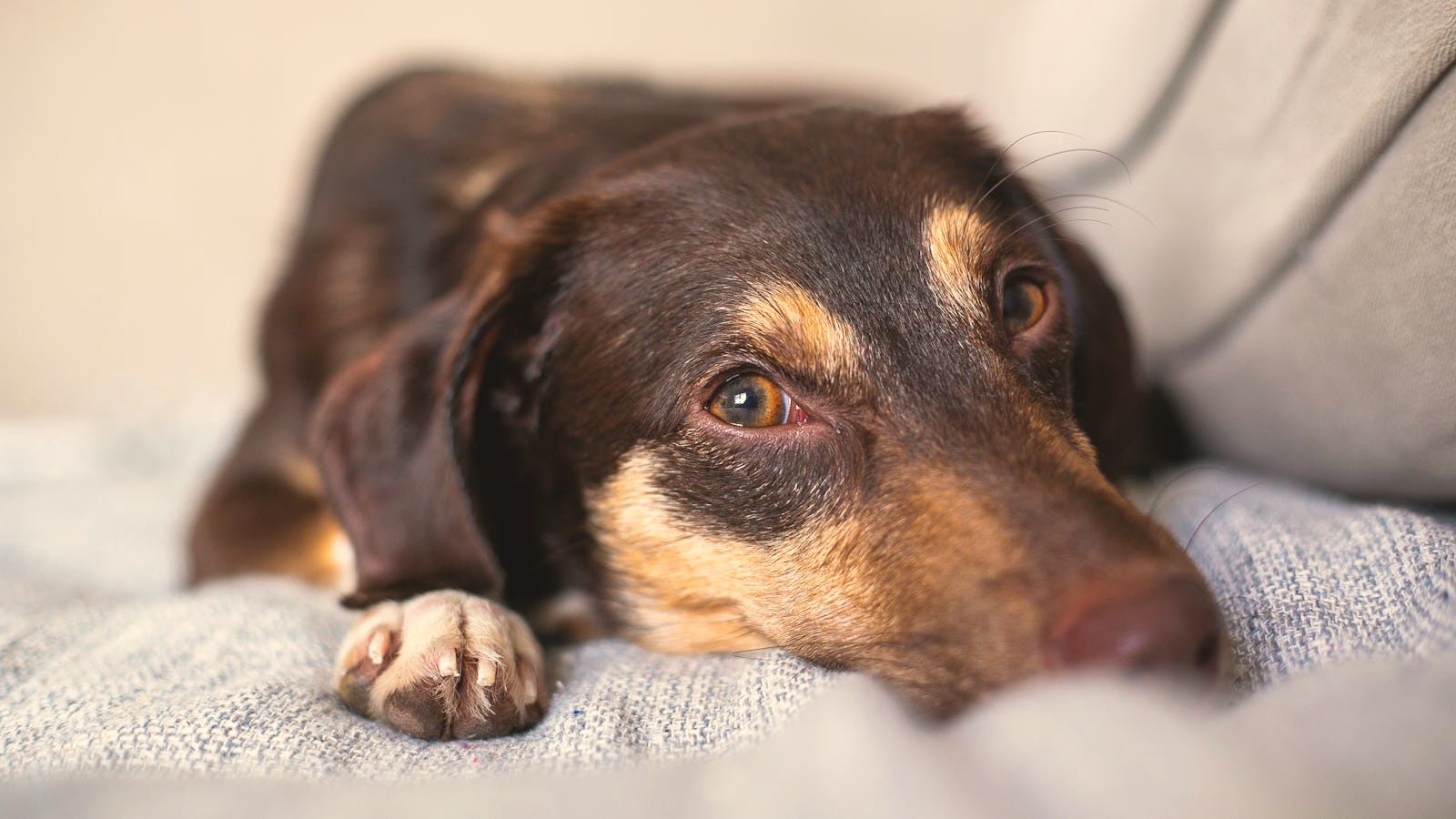
Legs and paws
The lower half is where you catch the decision before it is made, which is why it matters so much in reactive work.
- Up on the toes, body lifted and elongated. Arousal climbing.
- A lifted paw. Unsure, appeasing, a gun dog’s point, or anticipation, and always rule out a sore foot first.
- Legs angled, weight shifted forward, chest up. Anticipation, an escalation sign. This is the step before a lunge.
- Toes and nails relaxed versus gripped tight. Whether the dog is about to move or not. As I tell owners, when even the little toe is relaxed, the dog is not going anywhere.
- Lying down with the back legs pointing out, bum rolled to one side. A dog with no plan to move, and a position that buys you reaction time if it does.
How a dog uses its back legs to lunge decides a lot. A dog that pushes hard off the rear, a Frenchie say, drives low and forward. A dog that leans into the harness with light back legs, a Cavoodle say, ends up rearing vertical. Different muscles, different bodies, and a big part of why two lunging dogs get two different sets of equipment.
The five states
You never read one part alone. You gather all of it and land on a state. I sort dogs into five.
- Pressured. Working hard, a little challenged, but able to do the task. Good pressure.
- Stressed. Discomfort, fear, or its milder form, uncertainty. Push pressure too far and it tips into stress, and past that the dog shuts down and there is nothing to work with. It is a fine line.
- Excited. Curiosity or playfulness. A good thing, especially aimed at you.
- Aggressive. Offensive, dominant, and often fear underneath.
- Relaxed. Calm, neutral, settled. Zen.
The goal is a dog that lives in the relaxed state most of the time, and points its excitement at you when you ask for it. In training I move a dog deliberately between relaxed, pressured and excited, because every dog needs some pressure to learn and to tire its brain. What I do not want is a dog living in stress or aggression. Once you can name the state, you know whether to ask for more or to back right off.
What you do with all of this
Reading the dog is not the trick at the end, it is the thing the whole method rests on. Once an owner can see the curve, the ears flicking back, the weight shifting forward, the tail rising a centimetre, the training reads itself, because you are answering the feeling before it becomes an action. That is also why I film so much in sessions and play it back. A signal is a split second, and most people miss it the first hundred times until someone freezes the frame and points.
Want a plain read on where your dog sits right now? The free assessment gives you one in two minutes. Or learn to see it in your own dog with a Hachi Way trainer, in person or online, anywhere in the world.