
Guide
How to get a calm, well-mannered dog
Pulling, barking and jumping look like three problems. They are usually one: a dog with too much arousal and too little structure. Fix the shape of the day and the manners follow.
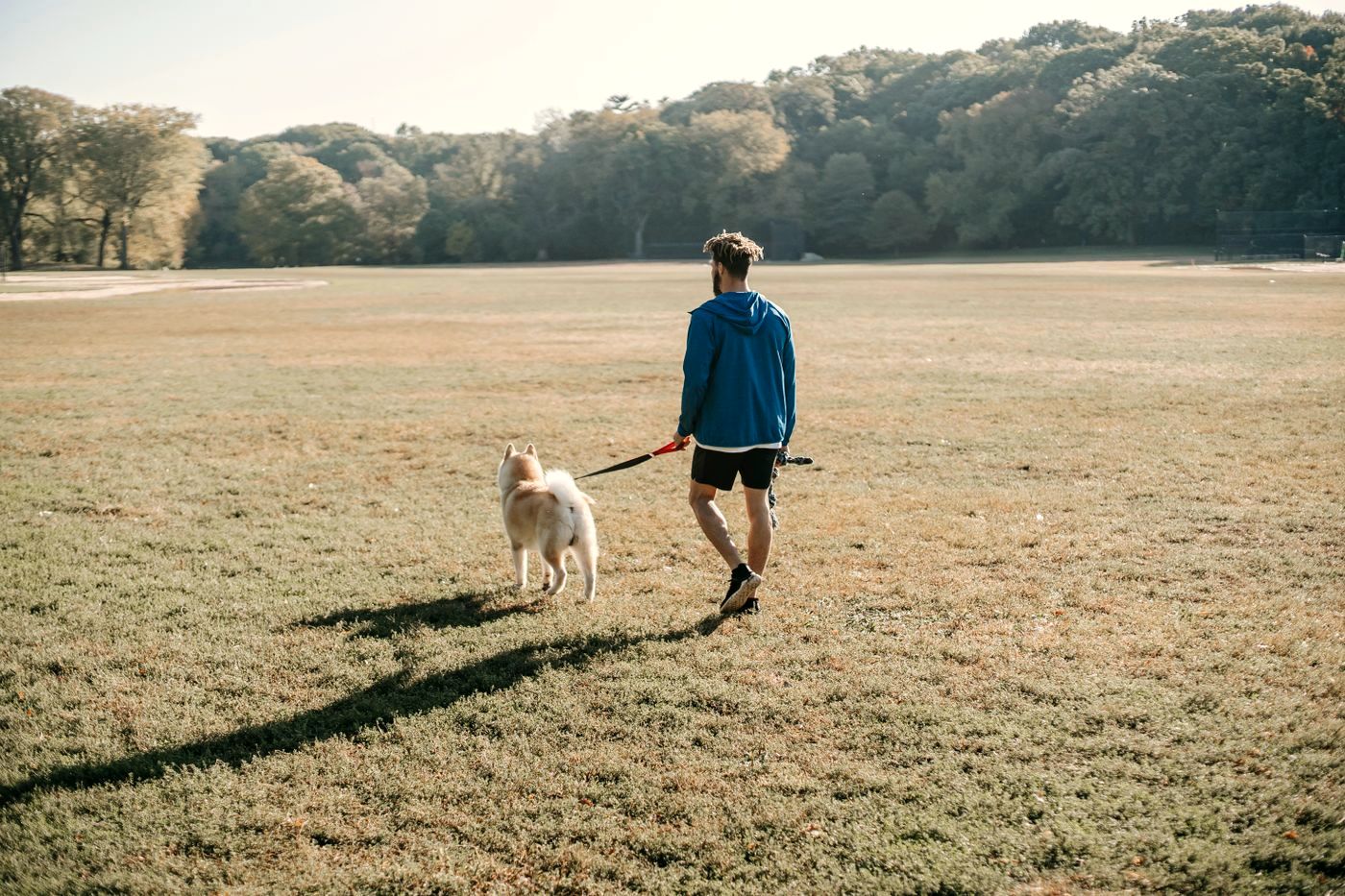
You get a well-mannered dog by fixing the over-arousal and lack of structure behind the behaviour, not by drilling each manner one at a time. The everyday complaints, pulling on the lead, barking at the door, jumping on guests, are rarely separate training gaps. They are the same over-arousal showing up in different rooms. You can drill each one, or you can change what is driving all of them.
Here is the practical handling for each, then the structure that makes them stick.
What to do now
-
Build a real off-switch, through PLAY
A dog with no off-switch never learned that arousal can be turned on and off on cue. You build that through PLAY. Give the game a clear start word and a clear end word: play only ever begins when you say the start word, and it is over the moment you say the end word. Be completely consistent, every single time. The dog learns to switch on when you ask and, just as importantly, to switch off the instant you say so.
-
Stop the behaviour paying off
A dog that barks and gets let out, or jumps and gets a reaction, has every reason to keep going. The behaviour is working. Only the settled dog gets out of the crate; only four feet on the floor get the greeting. Take the payoff away and the habit fades.
-
Take the rehearsal away
If the dog barks at the window all day, block the view. Every bark at the glass is practice that keeps the baseline up. Manage arrivals with a lead or a gate so jumping cannot be rehearsed either. Remove the practice and the rest gets easier.
-
Hold one line on the lead
Before each walk, decide what it is. If it is walking time, the dog stays beside you on a loose lead, and that is the rule. If it is sniffing time, the dog is free to sniff and potter but still cannot drag you, the lead stays loose. What you do not do is let one blur into the other. If you are practising loose-lead walking, keep the dog at your side and hold that line.
-
Stop the small corrections
Repeated lead-pops, pleading and a running "no" teach the dog nothing and add tension. One clean, calm action beats ten half-actions.
Want this handled with you, not just read about?
Train with meWhy it works
Two modes do most of the work here. CALM is rest on your terms, where the dog learns that demanding behaviour gets nothing and that it can switch off even when the house is busy. ANCHOR is brain work on the walk, where instead of feeding commands you set things up so the dog chooses to stay with you.
Manners are downstream of those. A dog that can settle at home and think on a walk does not need a command for every situation, because it is not flooded in the first place. The handler stops managing and starts relating.
This is the difference between a performative dog, responsive when commanded and opportunistic when not, and a relaxed one that makes the good decision on its own.
Keep reading
Ready to fix this for good?
Train with me
Reading and a few steps get you started. The fastest way through is together. Tell me about your dog and I will match you to the right starting point, online from anywhere or in person in Melbourne. Not sure yet? Take the free two-minute assessment first.