
Guide
Adolescent dogs: why training stops working at 8 months
Your dog did not regress. They grew up. The training that leaned on cues and rewards gets thin exactly when a teenager starts testing what happens if they do not comply.
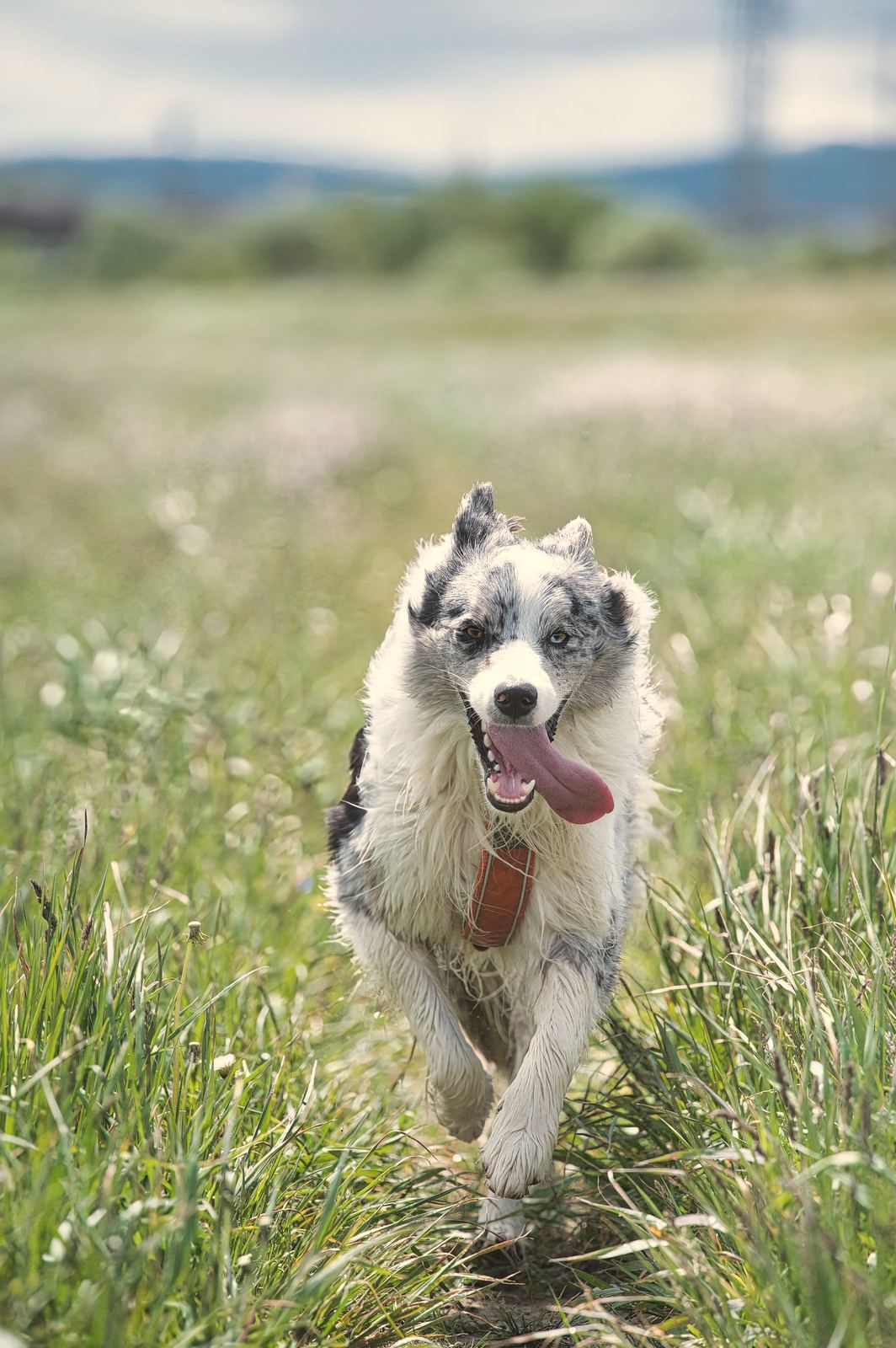
Training stops working around eight months because a dog that only ever learned to wait for commands hits adolescence and starts asking what happens when it does not. Somewhere around eight to twelve months, the dog that used to listen stops. Owners read it as regression or stubbornness. It is neither.
The way through is not more obedience. Here is what to do, then why it works.
What to do now
-
Audit the four modes
Walk through a typical week and tally how much real play, brain work, rest and free time the dog actually gets. The mode that is missing is usually the one driving the behaviour you are fighting. In teenagers it is often genuine rest or one-on-one play.
-
Teach that doing nothing is allowed
A lot of teenage trouble, demand barking, pulling toward every dog, pestering you at home, comes from a dog that never learned that waiting, resting and being near you without being engaged is a valid state. Build stretches where nothing is asked, and nothing is given for demanding it.
-
Foot on the lead, not hands
When excitement spikes and the dog locks onto something, the instinct is to grab and tug the lead. That loads the spring: you pull back, the dog pulls forward, the tension validates the excitement, and when it releases the dog fires out harder. Instead, stand on the lead where it meets the ground. It is slack when the dog is near your feet and a quiet stop if it lunges. Then wait, no tugging, no voice, no eye contact.
-
Swap commands for decisions
Instead of cueing every behaviour, set up situations where the good choice is the obvious one and let the dog make it. A teenager that learns to decide well holds up far better than one that only responds when told.
-
Hold the lines that slipped, calmly
Households let a mode or two go soft over the first year, and adolescence finds every gap. Pick the boundary that slipped most and hold it firmly and consistently. This is the stage where frustration creeps into handling, and pleading or repeated corrections make a teenager worse, not better.
Want this handled with you, not just read about?
Train with meWhy it works
A lot of what looks like defiance at this age is simply impulse control that has not arrived yet. The dog lives at the top of its waterline, and the demand barking at home and the pulling toward every dog on a walk are the same pattern: a dog that has not learned to regulate itself without you doing it for it.
This is also why a friendly, social teenager can still be reactive. If the arousal spikes the moment it spots another dog and its attention leaves you completely, that is a reactive pattern, even though the dog only wants to say hello. The excitement is the problem, not aggression, and the loss of regulation is the same.
The method's answer is to build decisions, not commands, the heart of ANCHOR, and to restore whatever mode is missing. A dog taught to make its own good choices comes out of adolescence steadier than one that was only ever told. They grow through this stage, not out of it, and what they come out as depends on what you build now.
Keep reading
Ready to fix this for good?
Train with me
Reading and a few steps get you started. The fastest way through is together. Tell me about your dog and I will match you to the right starting point, online from anywhere or in person in Melbourne. Not sure yet? Take the free two-minute assessment first.