
Guide
How to calm a reactive dog
Reactivity is not bad behaviour. It is a dog who is already over the line before the trigger appears. You bring it down by changing the week, not by correcting the moment.
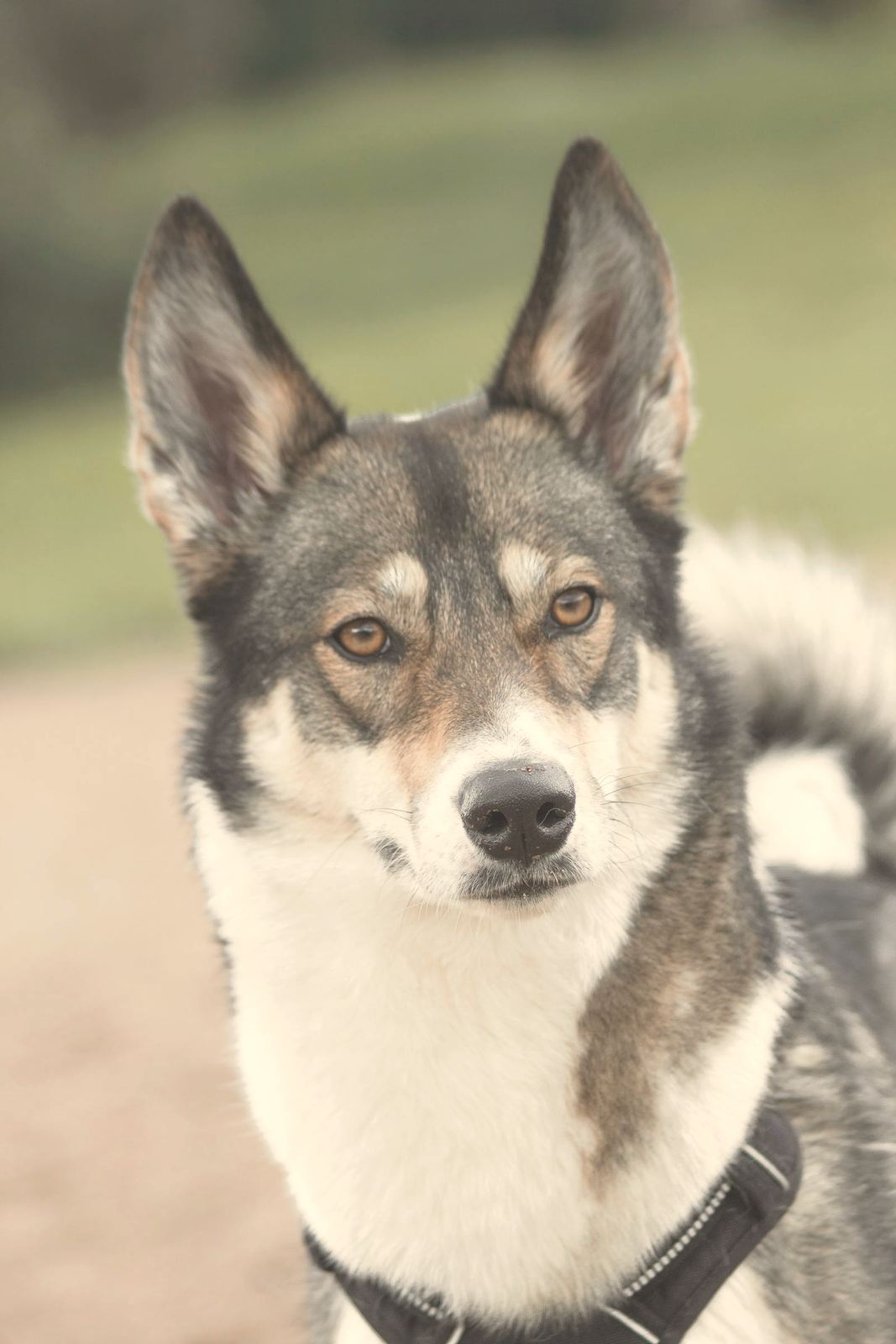
You calm a reactive dog by lowering the level it lives at day to day, not by correcting the lunge in the moment. If your dog barks and lunges at other dogs, people, bikes or cars, the instinct is to correct it, distract it, or tighten the lead and march through. All three work on the moment and miss the cause. Reactivity is a nervous system running too hot, not bad behaviour. The dog is already near the top of its range before the trigger appears, and the trigger just tips it over.
So the work is not a trick for the moment. It is lowering the level the dog lives at, and taking away the daily rehearsal that keeps it high. Here is what to do, then why it works.
What to do now
-
Take the triggers away for now
Stop walking the gauntlet. Turn around, cross the road, change the route. Every reaction your dog rehearses makes the next one easier, so giving triggers a wide berth is not failing the walk, it is taking the practice away.
-
Keep the lead loose, never tight
A tight lead carries your tension straight down the line and braces the dog into the posture that comes just before a lunge. The moment you tighten, you have told the dog something is wrong. Let the lead hang, soften your own body, and use a longer lead, around three metres, so the dog is not corrected every few steps.
-
If a trigger is unavoidable, add nothing
A dog appears around a corner, the path is too narrow to cross. Put your foot on the lead so your dog is safe and cannot launch, then give nothing: no talking it up, no patting, no eye contact, no treats. Every one of those is an input that tells an over-aroused dog the moment is real. Stay quiet and still, let the wave crest and fall, and move on.
-
Fix sleep first
Most dogs sold to me as reactive are, underneath it, exhausted. A dog regulates closer to a toddler than an adult, and a tired one runs irritable and over-reactive all day. Real rest, on your terms, in a crate or on a tether, does more in the first fortnight than any drill.
-
Take back some freedom, and decompress
A dog with a window to patrol, a couch to guard and the run of the house has no off switch. Reduce the free roaming, and swap the instinct to do more, more walks, more enrichment, more games, for long stretches of low-key, undemanding time. The baseline falls in the quiet hours, not the busy ones.
-
Don't just walk it more
"A tired dog is a good dog" sinks more reactive dogs than any other piece of advice. A long daily walk past a line of triggers does not drain the dog, it raises the baseline and rehearses the reaction twice a day. While the baseline comes down, most reactive dogs need less walking and more structure, not a longer lap of the same gauntlet.
Want this handled with you, not just read about?
Train with meWhy it works
The image at the centre of this is the waterline. Every dog has a baseline level of arousal, and triggers push it up. A reactive dog lives at high tide, already close to the point where it reacts before anything has happened. Training is not about managing the waves. It is about bringing the waterline down, so there is room between where the dog sits and the point it tips over.
That is why the levers are quiet ones: sleep, less free stimulation, real decompression, and far less rehearsal of the reaction. A nervous system running hot all day cannot be talked down at the trigger. The calm is built in the quiet hours, and then it is there when you need it.
It is also why the bark is left alone. The bark is information, the dog telling you it is not coping. Punish the warning and some dogs stop giving it, and you are left with a dog that goes straight to the bite with no signal first. You want the warning, not silence.
The change is slow at first, then sudden. The dog starts giving you longer windows of calm, and one day chooses to look away from something it used to bark at. That is the waterline coming down. The full version of this work is guided, it is what a Hachi Way trainer does with you.
Keep reading
Ready to fix this for good?
Train with me
Reading and a few steps get you started. The fastest way through is together. Tell me about your dog and I will match you to the right starting point, online from anywhere or in person in Melbourne. Not sure yet? Take the free two-minute assessment first.