
Guide
How to raise a calm puppy
The nervous system your puppy builds in the first year is the one you live with for the next ten. Get rest and arousal right early and you skip most of what brings owners to a trainer later.
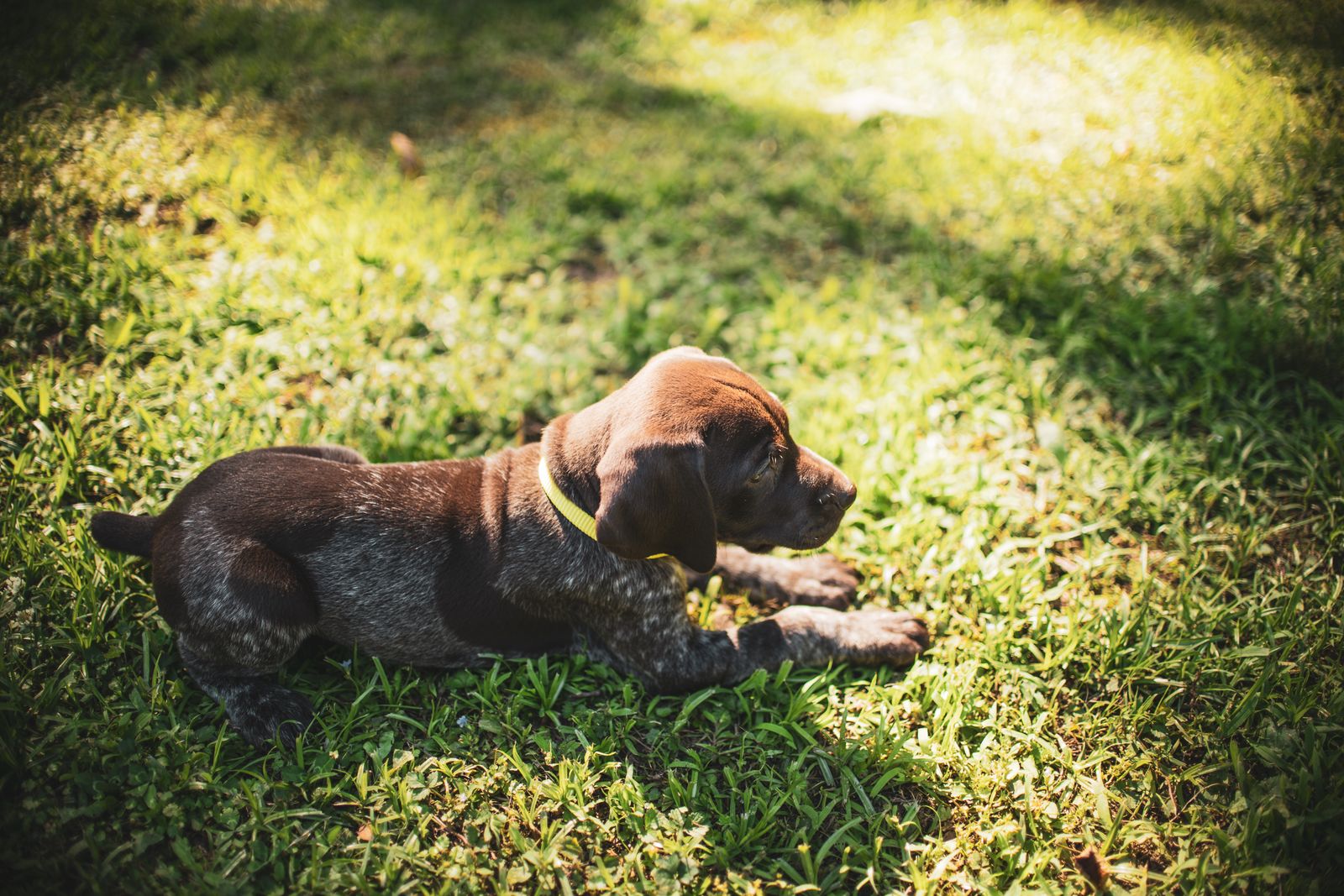
You raise a calm puppy by getting rest, arousal and consistency right from day one, long before you reach for a command list. Most people who end up needing a trainer did not plan to. They planned to get a puppy, love it, and arrive at a calm companion. What they did not plan for is the year in between, and the handful of things in it that decide how the dog turns out.
Raise the dog you want, not the puppy. Decide the calm adult you are aiming for and build toward it from day one, because dogs do not grow out of things, you build them or you fix them later. A puppy is closer to a toddler than a colleague, so you do not start with a command list. You start with rest, arousal, and consistency. Here is what to set up, then why it matters more than obedience.
What to do now
-
Protect their rest, all of it
A young puppy needs around eighteen to twenty hours of rest in every twenty-four, and most do not get it. Set up a quiet crate or confined space before pickup and run rest on a schedule you keep, rather than waiting for the puppy to ask. An overtired puppy bites harder, ignores more and cannot settle, and people read it as energy when it is exhaustion.
-
Teach settling on purpose
Pick one daily moment your puppy usually loses it, dinner prep, the evening, and put them in the crate or on a tether with a long-lasting chew. Let them out only once settled, not just quiet. Repeat daily until switching off is a habit they reach for.
-
Walk to take it in, not to wear it out
"A tired puppy is a good puppy" is the advice that builds reactive adolescents. A walk is not exercise to a puppy, it is a flood of new sights, sounds and surfaces. The point is not distance, it is taking the world in slowly. Think of the zoo: you want your puppy stopping and watching at each exhibit, not racing through to the exit. Stop often, let it look, sniff and process, and head home before it is overwhelmed. A few quiet minutes of taking things in does more than a long lap ever will, and it protects growing joints too.
-
Socialise for quality, not numbers
Think of your puppy's brain in these weeks as a sponge: show it as much of the world as you can, noises, surfaces, traffic, umbrellas, weather, so the sponge grows big enough to take new things in its stride later. It is about the world, not other dogs. With people and dogs, look for calm people and good dogs, the way you would check a playground is safe before letting your kids in. One calm encounter beats a dozen rushed ones. Done badly, socialisation becomes flooding, which builds the fear it was meant to prevent.
-
Play through the scary bits
A dog cannot feel fear and play at the same time. So when your puppy meets something that worries it, get a game going rather than soothing it. Play also builds the bond, and the bond is what gives you a calm, willing dog later, not one you have to bribe or threaten.
-
Agree the rules across the household
A puppy needs one lead person who holds the routine when it is inconvenient, and the same rules from everyone. If the rules shift depending on who is home, the puppy reads it instantly and runs a different approach for each person. Most year-old "dog problems" are really agreement problems between people.
Want this handled with you, not just read about?
Train with meWhy it works
Whatever nervous system a dog builds in its first year is the one you manage for the next ten to fifteen. A puppy that spends that year overstimulated, under-rested and handled inconsistently arrives at adulthood with its waterline sitting close to the edge, where almost any trigger sends it over. Lowering a waterline that developed wrong takes months. Getting it right from the start does not.
And the start is earlier than pickup day. The first eight weeks, before a puppy ever comes home, are a period of fast neurological development, the foundational software being installed. A good breeder is shaping that brain so the dog can cope with the glitches of normal life later, which is why it pays to choose carefully and, where you can, to begin the work before homecoming rather than after.
With a puppy I run three of the four modes, PLAY, CALM and EXPLORE, as gentle daily cycles so the puppy learns each one. ANCHOR, the settled brain-work that keeps a grown dog calm in a cafe or under your desk, comes later, with adolescence; a young puppy has no use for it yet. The mode most often missing is CALM, real rest as a skill the puppy learns, not a mood you wait for.
This is why early childhood education does more of the work in a puppy session than obedience does. You are not chasing a dog that obeys. You are raising one whose needs are met and who makes good choices on its own, and that comes from routine, attention and relationship, not a command list.
Aim for content, not just happy. Almost every dog is happy; few are genuinely settled. A puppy whose four modes are met, and who has bonded with you through real play, grows into the calm, content dog most people actually want.
Keep reading
Ready to fix this for good?
Train with me
Reading and a few steps get you started. The fastest way through is together. Tell me about your dog and I will match you to the right starting point, online from anywhere or in person in Melbourne. Not sure yet? Take the free two-minute assessment first.